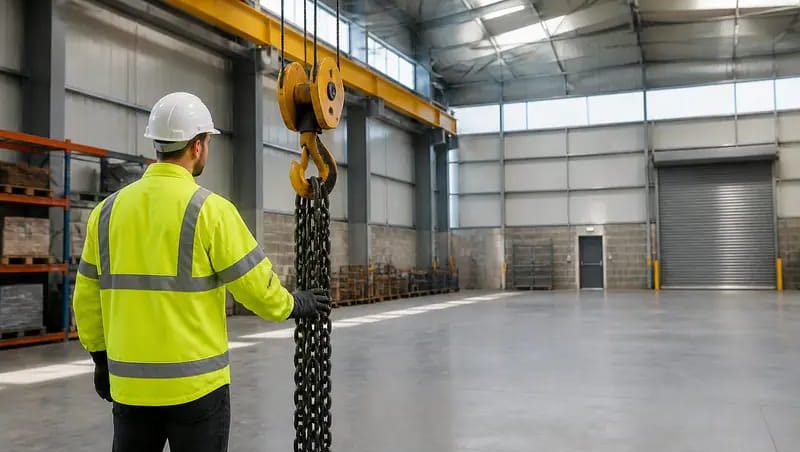
The Report of Thorough Examination certificate that you receive after an LOLER inspection is a legal document that proves that your lifting equipment has been inspected by a competent person and is fit for use or not. It is likely to be one of the first things that the HSE or your insurer will ask to see in the event of an accident or a claim. Treat it with the same respect as any other evidence.
Why This Document Matters
The Report of Thorough Examination (the certificate) is actually evidence of the lifting equipment having been inspected by a competent person. It is a legal document which clearly sets out whether the lifting equipment is suitable for use or not. In the event of an accident being investigated by the HSE or a claim being made by an insurer, this document will be required as evidence. So treat this with the same regard as you would with any other evidence.
Check The Equipment Details
Check the basic details against the item reported in the report (Report of Thorough Examination). If a serial number has been incorrectly typed, or the location reported is incorrectly described (e.g. it states ‘warehouse’ but you have three warehouses), it will protect no-one. Query the report immediately.
Understand The Two Key Dates
Even when you know that every lifting equipment needs to be inspected from time to time, it is not always easy to work out when the next inspection is due. For example, the date of the inspection (the date of examination) does not necessarily have to be exactly six or twelve months before the next inspection. For example, lifting accessories (such as chains and slings) typically need to be inspected every six months, but other lifting equipment is typically inspected every twelve months. In both cases, however, a competent person may reduce the interval between inspections if he or she considers that necessary because of actual wear and tear, normal usage or other environmental and operational factors.
What Defects Reported Really Means
The term ‘defects reported’ may give cause for concern but this does not necessarily mean that the item has failed. Some defects can be monitored for wear and may require remedial action within a certain time frame. However, other defects could mean that the item must not be used until it has been repaired. If the report is not clear on the classification of defects, it is best to return to the examiner and get the point clarified in writing.
Check Who Actually Signed It
A Report of a Thorough Examination by a competent person of lifting equipment, is only valid if it contains the name of the person who carried out the work, their employer and a confirmation of their competence to carry out such work. The document must contain a printed name and a signature (or a ‘verified by’ electronic signature) and the company name of the person’s employer. It is not evidence of anything if it contains only a company logo and no personal name. This is guidance from the Lifting Equipment Engineers Association (to produce a Report of a Thorough Examination of lifting equipment etc.) and that is what you should expect to see in such a document.
Match SWL And Configuration To Real Use
It is also important to note the Safe Working Load and the Configuration shown on the report. Is this how your equipment is used? Has the examiner correctly recorded the single configuration for which the crane was rated, or are there other configurations of attachments that are used at strange angles for lifting? It is also worth noting that where lifting equipment is used in a number of different configurations then it is good practice to maintain organised records of the LOLER Inspections so that when the mode of use is changed it is easy to check if the report still applies.
When A Re-Examination Date Is Overdue
If you find that a Report of Thorough Examination has passed its ‘next examination date’ then the equipment must not be used until the overdue examination has been carried out by a competent person. You must also record the date that the equipment was withdrawn from service and the reason for this. This record is as important as the examination itself and must clearly show that action has been taken at the earliest opportunity.
Keeping Records For The Long Term
Until the next Report of Thorough Examination for the same item is issued, or for a period of up to 2 years, whichever is the greater period, reports of thorough examination need to be kept. In practice most companies keep these documents for a very long time, because eventually an incident will occur and a historian’s account of the equipment’s previous history will be required from the HSE’s or your insurers’ personnel. Simple filing of these reports in labelled folders on a shared network or in a pocket of a folder in the site office is the normal practice.
It’s very easy to understand the content of a LOLER Report of Thorough Examination. Knowing what to look for on the document will help you spot any problems with your equipment before they cause problems on site.