

Imagine struggling with dull scissors that leave ragged edges on your favorite quilt project. Frustration builds as you fight to keep lines straight. Now picture gliding through fabric layers smoothly, achieving clean cuts every time. A cordless fabric cutter transforms this experience by offering battery-powered efficiency without cords tangling your work. Tools like the cordless fabric cutter make precision accessible for hobbyists and professionals alike. Moreover, recent market data shows the global fabric cutting machine industry growing from US$3.9 billion in 2026 to US$6.4 billion by 2033 at a 7.3% CAGR, fueled by demands for accuracy in textiles. Additionally, studies reveal high-precision tools reduce material waste by optimizing cuts, according to Persistence Market Research. This shift highlights how such devices elevate crafting quality.
What Is a Cordless Fabric Cutter?
Crafters often seek tools that combine mobility with power. A cordless fabric cutter fits this need perfectly. This device runs on rechargeable batteries, allowing users to cut fabrics anywhere without outlets. Designers equip it with sharp blades that move automatically, slicing through materials effortlessly.
Furthermore, these cutters come in various forms like rotary or scissor styles. Rotary versions spin a circular blade for smooth edges. Scissor types mimic traditional shears but add electric assistance. Users appreciate the lightweight build, which enhances control during detailed work.
In addition, many models feature adjustable speeds. This customization helps tackle different fabric thicknesses. For instance, quilters handle multiple layers without strain. Overall, the tool’s design prioritizes user convenience and accuracy.
How Does a Cordless Fabric Cutter Work?
Understanding the mechanics reveals its edge over manual options. The cutter activates with a simple button press, engaging a motor that drives the blade. Batteries supply consistent power, ensuring steady performance throughout sessions.
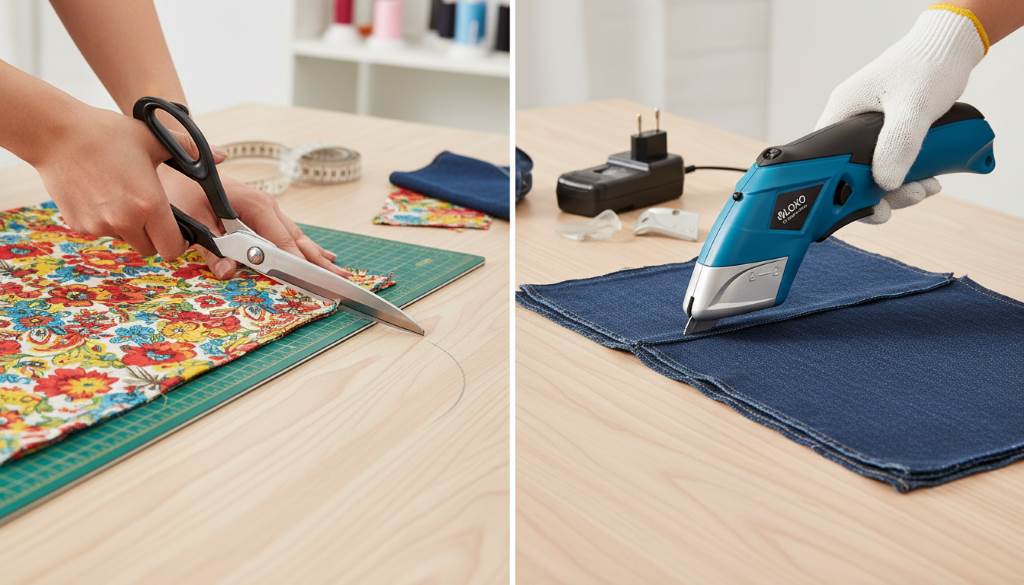
Moreover, built-in lights illuminate the cutting path. This feature aids visibility in dim spaces. Blades sharpen themselves in some designs, maintaining sharpness for precise results. Crafters notice fewer slips as the tool glides along rulers or patterns.
Additionally, safety mechanisms prevent accidental starts. Guards protect fingers while allowing close access to fabric. The process mimics hand cutting but amplifies speed and control. Consequently, projects finish faster with professional finishes.
Key Benefits of Using a Cordless Fabric Cutter for Precision
Precision defines successful sewing outcomes. A wireless fabric shear excels here by minimizing human error. Steady blade motion creates uniform edges, unlike shaky manual cuts.
Furthermore, it handles curves and intricate shapes with ease. Users achieve detailed patterns without distortion. This capability proves vital for applique work or garment alterations.
In addition, the tool reduces fatigue during long sessions. Less physical effort means sustained focus on accuracy. Crafters report fewer mistakes, leading to higher-quality pieces.
Moreover, versatility extends to various materials. From delicate silks to sturdy denims, the cutter adapts seamlessly. This broad application enhances overall project precision.
Comparing Cordless Fabric Cutters to Traditional Scissors
Traditional scissors demand constant hand pressure. This often leads to uneven lines over time. A battery-powered cutter eliminates this issue by automating the cutting action.
Additionally, manual tools tire users quickly on thick stacks. Electric versions slice through multiple layers effortlessly. Quilters, for example, cut up to 32 fabric sheets at once, as shown in crafting videos.
Furthermore, precision suffers with dull blades in standard shears. Cordless models maintain sharpness longer through built-in features. The result? Cleaner edges and less rework.
However, traditional options suit quick, simple tasks. Yet for detailed projects, the electric alternative shines. It combines speed with accuracy, transforming routine cutting.
Ergonomic Advantages in Fabric Cutting
Ergonomics play a crucial role in crafting health. Cordless cutters reduce wrist strain by requiring minimal force. Users hold the tool lightly while the motor does the work.
Moreover, their design promotes neutral hand positions. This prevents repetitive injuries common in textile crafts. Research from PMC studies shows ergonomic tools lower musculoskeletal disorder risks among weavers and sewers.
In addition, lightweight construction eases maneuverability. Crafters move freely without cord restrictions. This freedom supports better posture during extended sessions.
Additionally, vibration-dampening features soften impacts. Hands stay comfortable, allowing prolonged use. Overall, these benefits foster a healthier crafting experience.
Applications in Quilting and Sewing Projects
Quilting demands exact measurements for seamless piecing. A cordless fabric cutter ensures strips align perfectly. It handles bias cuts without stretching fabrics.
Furthermore, in garment sewing, precise notches and seams matter. The tool creates accurate markings quickly. Dressmakers save time on alterations, focusing on fitting instead.
Additionally, for home decor, it tackles large panels efficiently. Curtains and upholstery benefit from straight, clean lines. Hobbyists expand their projects with confidence.
Moreover, applique artists appreciate the fine control. Intricate motifs emerge flawlessly. This versatility opens new creative avenues in sewing.
Enhancing Speed Without Sacrificing Accuracy
Speed often compromises detail in manual cutting. Cordless cutters balance both by accelerating the process. Blades move rapidly yet follow user guidance precisely.
In addition, adjustable settings match project needs. Slow speeds suit delicate work, while faster ones handle bulk. This adaptability maintains high standards.
Furthermore, fewer pauses for sharpening boost workflow. Crafters complete tasks in half the time. Productivity rises without quality dips.
However, practice refines technique. Beginners start slow to build skill. Soon, they achieve professional results efficiently.
Tips for Choosing the Right Cordless Fabric Cutter
Selecting a model involves assessing needs. Consider battery life for uninterrupted sessions. Longer runtimes suit extensive projects.
Moreover, evaluate blade types for material compatibility. Rotary blades excel on straight lines, scissor styles on curves. Match the tool to your common tasks.
Additionally, check weight and grip comfort. Lightweight designs reduce fatigue. Ergonomic handles ensure secure hold.
Furthermore, read user reviews for real insights. Experiences highlight reliability in precision work. This research guides informed choices.
Related:
Tools for Performance Enhancement of Cars
Best Practices for Using a Cordless Fabric Cutter
Preparation sets the stage for success. Lay fabrics flat on stable surfaces. Use mats to protect blades and tables.
In addition, secure materials with weights or pins. This prevents shifting during cuts. Steady positioning yields accurate results.
Moreover, start with test scraps. Adjust speeds to find optimal settings. Practice builds confidence for main pieces.
Additionally, maintain a firm yet relaxed grip. Guide the tool gently along lines. Rushing invites errors, so pace yourself.
Furthermore, clean blades after use. Remove lint to preserve sharpness. Regular care extends tool life and precision.
Common Mistakes to Avoid for Better Precision
Overloading layers strains the motor. Stick to recommended thicknesses. This ensures clean, even cuts.
Moreover, ignoring safety guards risks injury. Keep them in place for protection. Awareness promotes safe operation.
Additionally, skipping warm-ups leads to uneven starts. Test on scraps first. This habit refines technique early.
Furthermore, neglecting battery checks causes interruptions. Charge fully before sessions. Consistency supports flawless work.
However, forcing the tool damages fabrics. Let it glide naturally. Patience delivers superior outcomes.
Integrating Cordless Cutters into Your Workflow
Adopting new tools requires adjustment. Begin with simple projects to learn handling. Gradually tackle complex designs.
In addition, organize your space for mobility. Clear areas allow free movement. Efficiency follows from thoughtful setup.
Moreover, combine with other aids like rulers. These enhance straight-line accuracy. Synergy elevates overall results.
Additionally, track progress in a journal. Note improvements in speed and precision. Reflection motivates continued use.
Furthermore, share experiences with communities. Feedback refines methods. Collective wisdom enriches your practice.
Case Studies: Real-World Improvements in Precision
One quilter switched to a cordless cutter for multi-layer stacks. She cut 16 fabric pieces simultaneously with razor-sharp edges. Her quilts assembled faster, winning local awards.
Moreover, a seamstress faced arthritis challenges. The tool reduced hand strain, allowing daily work. Precision in garment fits improved client satisfaction.
Additionally, a crafter experimented on fleece blankets. Electric assistance yielded straight borders effortlessly. Projects sold out at markets.
Furthermore, researchers noted in textile studies that ergonomic tools boost productivity by 29%. Artisans reported similar gains in accuracy.
However, each story underscores adaptability. Users tailor the cutter to needs, achieving consistent excellence.
The Role of Technology in Modern Fabric Cutting
Advancements drive tool evolution. Motors now offer variable speeds for fine control. Precision engineering minimizes blade wobble.
In addition, LED lights enhance visibility. Dark fabrics become easier to navigate. Technology bridges gaps in traditional methods.
Moreover, app integrations track usage. Data informs maintenance schedules. Smarter features sustain performance.
Additionally, materials science improves blades. Durable alloys resist wear longer. Innovation ensures lasting accuracy.
Furthermore, sustainability influences designs. Rechargeable batteries reduce waste. Eco-friendly options align with green crafting.
Future Trends in Cordless Cutting Tools
Emerging trends focus on smarter integration. AI could suggest optimal speeds based on fabrics. Automation elevates user experience.
Moreover, lighter batteries extend runtime. Portability reaches new levels. Crafters work remotely with ease.
Additionally, customizable blades adapt to tasks. Swappable heads handle diverse materials. Versatility expands applications.
Furthermore, health monitoring features track ergonomics. Alerts prevent overuse injuries. Wellness becomes integral.
However, affordability broadens access. Wider adoption transforms the crafting landscape.
Maintenance Tips to Sustain Precision Over Time
Regular care preserves tool effectiveness. Wipe blades after each use to remove debris. Cleanliness prevents buildup.
In addition, store in protective cases. This shields from dust and damage. Proper storage extends lifespan.
Moreover, inspect for wear periodically. Replace dull blades promptly. Sharpness directly impacts cut quality.
Additionally, charge batteries correctly. Avoid overcharging to maintain health. Consistent power supports reliable operation.
Furthermore, lubricate moving parts as needed. Smooth mechanics ensure fluid motion. Attention to details upholds precision.
Overcoming Challenges with Cordless Fabric Cutters
Battery life limits long sessions sometimes. Plan charges around breaks. This strategy keeps momentum.
Moreover, initial learning curves exist. Practice on scraps overcomes hesitation. Skill develops quickly.
Additionally, compatibility issues arise with thick materials. Select models suited for heavies. Research avoids mismatches.
Furthermore, noise levels vary. Choose quieter options for sensitive environments. Comfort enhances focus.
However, solutions abound through communities. Shared tips resolve common hurdles effectively.
How Precision Cutting Impacts Overall Project Quality
Accurate cuts form the foundation of strong seams. Fabrics align perfectly, reducing puckering. Finished items look polished.
In addition, waste decreases with exact measurements. Materials stretch further. Efficiency benefits budgets and resources.
Moreover, time saved on corrections accelerates completion. Projects move from idea to reality swiftly. Satisfaction grows.
Additionally, professional appearances attract admiration. Crafts gain value in markets or gifts. Quality elevates reputation.
Furthermore, consistency builds confidence. Repeat successes inspire bolder designs. Creativity flourishes.
Environmental Benefits of Efficient Cutting Tools
Precise tools minimize scrap generation. Less waste means fewer resources consumed. Sustainability improves.
Moreover, rechargeable power reduces corded energy draws. Batteries promote eco-friendly practices. Green choices matter.
Additionally, durable designs last longer. Fewer replacements lower manufacturing impacts. Longevity supports the planet.
Furthermore, efficient cutting conserves fabrics. Optimized layouts maximize yields. Conservation aligns with mindful crafting.
However, users contribute by recycling old tools. Responsible disposal completes the cycle.
Training Yourself for Maximum Precision
Start with basic exercises. Cut straight lines on paper first. Build hand-eye coordination.
In addition, progress to fabrics gradually. Experiment with textures. Adapt to variations.
Moreover, watch tutorials for techniques. Visual guides accelerate learning. Apply tips immediately.
Additionally, set goals for each session. Measure improvements. Tracking motivates persistence.
Furthermore, join workshops if available. Hands-on instruction refines skills. Community enhances growth.
Community Insights on Cordless Fabric Cutters
Forums buzz with positive stories. Users praise ease on arthritic hands. Comfort transforms hobbies.
Moreover, quilters share layer-cutting hacks. Techniques spread widely. Knowledge multiplies benefits.
Additionally, reviews highlight model strengths. Comparisons guide purchases. Informed decisions prevail.
Furthermore, groups host challenges. Participants showcase precision work. Inspiration flows freely.
However, critiques offer balance. Honest feedback drives improvements. Evolution continues.
Advanced Techniques for Expert Users
Experts layer fabrics strategically. Align patterns for bulk cutting. Efficiency multiplies.
In addition, incorporate templates. Custom shapes emerge accurately. Creativity expands.
Moreover, blend with digital designs. Scan and cut precisely. Technology merges with tradition.
Additionally, experiment with speeds. Fine-tune for materials. Mastery yields perfection.
Furthermore, collaborate on large projects. Tools facilitate team efforts. Results impress.
The Science Behind Precision in Fabric Cutting
Studies show tolerances as low as ±0.1mm in advanced cutters. Accuracy rivals industrial standards. Home crafters benefit.
Moreover, biomechanical research emphasizes reduced force. Less strain equals better control. Health integrates with precision.
Additionally, material science informs blade angles. Optimal designs prevent fraying. Edges stay crisp.
Furthermore, ergonomic evaluations use tools like REBA. Scores confirm lower risks. Data validates advantages.
However, ongoing research refines features. Innovations promise even greater accuracy.
Conclusion
A cordless fabric cutter revolutionizes precision by offering effortless, accurate cuts across projects. It reduces strain, boosts speed, and minimizes errors through smart design. Ergonomic benefits protect health while enhancing quality. Applications span quilting to sewing, proving its versatility. Tips and practices ensure optimal use. Embrace this tool to elevate your crafting. Start exploring options today and transform your cuts.
FAQs
FAQ 1: What fabrics work best with a cordless fabric cutter?
Cottons, fleeces, and denims suit it well. Delicate silks require slower speeds for care.
FAQ 2: How does a cordless cutter differ from a rotary one?
Cordless versions offer mobility without plugs. Rotary types focus on spinning blades for smooth lines.
FAQ 3: Can beginners use these cutters effectively?
Yes, with practice on scraps. Simple controls make learning straightforward.
FAQ 4: What maintenance keeps the cutter precise?
Clean blades regularly and charge batteries fully. Inspect for wear often.
FAQ 5: Does it handle multiple layers?
Absolutely, up to 32 in some cases. Adjust settings for thickness.
References
