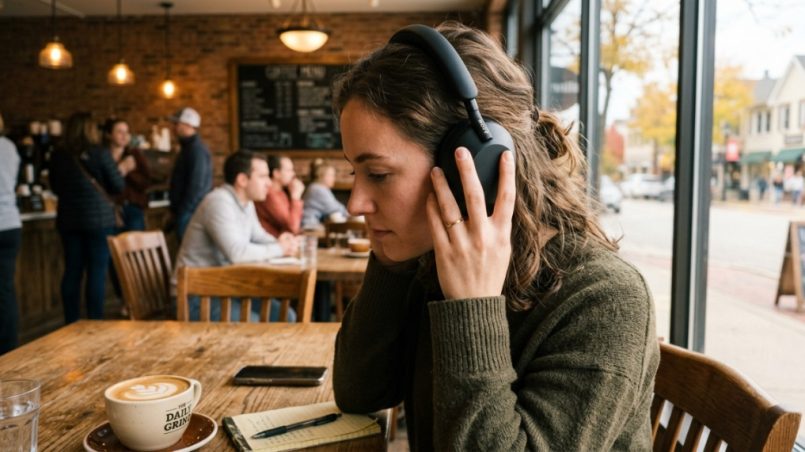
Living in Illinois means dealing with a wide range of noise—from the constant hum of the Stevenson Expressway during your commute to the chatter in a River North coffee shop or the roar of the “L” train overhead. If you rely on headphones to bring some quiet into your day, active noise cancellation (ANC) isn’t just a luxury; it’s a daily necessity. The problem is that choosing the right pair for everyday life in the Prairie State involves more than just picking the most expensive model on the shelf. You need a set that handles the harsh Midwest winters, performs well on calls, and delivers reliability for years. This guide breaks down the specific considerations for finding the best daily use ANC headphones Illinois residents actually need, focusing on practical features rather than marketing jargon.
Key Takeaways
- Battery life and cold weather tolerance matter most: Illinois winters drain batteries faster, so look for headphones with robust claimed battery life and low power drain in cold conditions.
- Transparency mode is essential for commuters: You need to hear platform announcements and traffic; a great transparency mode is just as important as ANC itself.
- Comfort for extended wear is non-negotiable: Whether you are working hybrid or commuting, a poorly fitted headband or heavy ear cups will cause fatigue long before the battery dies.
- You don’t need to spend $400 to get solid ANC: Several mid-range models offer excellent noise cancellation that handles the specific low-frequency hum of traffic and HVAC systems.
The Illinois Daily Use Case: Why Context Matters
Before diving into specs, consider the specific environment. In Chicago, a typical daily commute might involve walking in below-freezing wind, sitting in a noisy bus, and then working in an open-plan office. In the suburbs, the sound profile is different—more highway noise and less pedestrian traffic. Your choice hinges on where you’ll be using them the most.
Indoor vs. Outdoor Sound Profiles
ANC is generally optimized for constant, low-frequency sounds (like engines or AC units). It does a less impressive job on sudden, sharp sounds like a car horn or a dog barking. For Illinois residents, this means the ANC chip quality matters more for the commute portion than the office portion. Look for headphones that specifically mention “multi-microphone” setups for better real-world filtering. In a typical office, you actually turn ANC off and rely on the passive seal and a good transparency mode to hear colleagues when they speak to you.
Critical Features for Harsh Climates
Most tech reviews focus on sound quality and ANC depth, but in Illinois, the physical build and environmental resilience are equally important. You need headphones that survive a sweaty summer walk and a freezing January morning without cracking or malfunctioning.

Battery Chemistry and Cold Weather
Lithium-ion batteries lose capacity temporarily in cold temperatures. If you take your headphones outside for a 20-minute walk in 20°F weather, you might see the battery indicator drop by 10-15% temporarily. This isn’t a defect, but it means you should not buy a pair that claims only 6 hours of battery life. You need a headroom of at least 20 hours (with ANC on) to ensure you aren’t left without music on your commute home. Over-ear headphones generally have larger batteries and are less affected by this than true wireless earbuds.
Moisture Resistance and Seals
While most flagship headphones aren’t fully waterproof, they need to handle light snow and sweat. Look for an IPX4 rating or higher (resistance to splashes). More importantly, ensure the ear cushions are plush but sealed well. If the foam is too porous, wind noise will interfere with the ANC microphones, creating a constant “rushing” sound in your ears during winter walks, To ensure you get the most out of your audio gear during your daily travels, read our comprehensive guide on how to Choose ANC Headphones for Daily Use in Illinois to find the ideal pair for your lifestyle.
How to Evaluate ANC Performance (Beyond the Spec Sheet)
Retailers will quote you a “noise reduction percentage” or show you a graph, but real-world subjective testing is the only way to know if it works. However, you can evaluate performance by looking at how the headphones handle specific frequencies.
Understanding the Frequencies
Good ANC reduces low-frequency hum (like a bus engine) by 90-95%. High-frequency tones (like voices or keyboard clicks) are reduced primarily by the physical seal of the ear cups. If you are buying for an open office, prioritize headphones with thick memory foam ear pads. If you are buying for the Kennedy Expressway, prioritize headphones with aggressive low-frequency cancellation. You can tell the latter by looking for models that mention “adaptive noise cancellation” which adjusts the level of filtering based on the environment.
The “Self-Noise” Test
A critical flaw in many budget ANC headphones is “self-noise”—a faint hissing sound generated by the ANC circuitry itself. This is often masked in a noisy store but becomes irritating in a quiet library. When researching models, look for user reviews that specifically mention hissing or static during quiet passages of music. This is a sign of poor digital signal processing (DSP). For daily use, this will make you turn off the ANC, defeating its purpose.
Comfort and Ergonomics: The Long Haul
You will likely wear these for 4-6 hours a day. A headband that is too tight creates a “hot spot” on the top of your head. Ear cups that are too small cause pressure on your jaw. In the winter, you might also be wearing a hat or hood, which adds extra pressure on the headband.
Weight and Clamping Force
Look for headphones under 300 grams. Anything heavier will cause neck fatigue during long commutes. More important than weight is clamping force. Reading reviews, look for terms like “firm grip” versus “crushing.” For extended daily use, a lighter clamping force is preferable, even if it means the ANC is slightly less effective because the passive seal isn’t as tight. You can always turn up the volume to compensate for a slightly looser seal, but you can’t fix a headache from pressure points.
Connectivity and Multipoint: Switching Between Devices
In a typical day, you might take a Zoom call on your laptop, then listen to a podcast on your phone while walking to lunch. This is where “Multipoint” connectivity saves your sanity. This feature allows the headphones to connect to two devices simultaneously, automatically pausing your laptop audio when your phone rings.
Codec Support and Call Quality
For daily use, AAC and SBC codecs are sufficient (you won’t hear a massive difference between aptX and AAC on a noisy commute). However, microphone quality is often overlooked. In Illinois, wind is a major issue. Headphones with a “bone conduction” mic or a voice-pickup array that separates your voice from wind noise are worth seeking out. Do not assume expensive headphones have good mics—this is often a weak point for brand-name models. Look for reviews that specifically test “wind noise reduction” in microphone calls.
Over-Ear vs. In-Ear: A Decision Guide for Illinois
This is the most common dilemma. There is no single “best” type; it depends on the season.
| Feature | Over-Ear (e.g., Sony WH-1000XM5) | In-Ear (e.g., AirPods Pro 2) |
|---|---|---|
| Battery Life | 30+ hours (great for long days away from a charger) | 6-8 hours (requires a charging case) |
| Cold Weather Use | Excellent—keeps ears warm, but may not fit under a ski helmet | Good—works with a beanie, but battery drains faster |
| Commute Suitability | Bulky to carry around if you remove them in an office | Portable and easy to store |
| Comfort for 8 Hours | Superior if weight is under 300g | Can cause ear canal fatigue |
For year-round use in Illinois, a hybrid approach often works best. Use over-ears for the winter commute and long office days, and keep a pair of true wireless earbuds in your bag for summer months when your ears get hot.
Mistakes to Avoid When Buying
Even experienced buyers fall into traps. Here are the most common errors specific to daily use:
- Ignoring the case size: High-end over-ears come with large hard cases. If you have a small commute backpack, this is a dealbreaker. Measure your bag before you buy.
- Buying for the “best” sound, not the “best” ANC: For daily commuting, the quality of noise cancellation is more important than absolute audio fidelity. You won’t notice subtle bass details on a loud train.
- Forgetting about the app: Most modern ANC headphones rely on a companion app for setting adjustments. Ensure the app actually works in your region and has the EQ settings you need.
- Not checking the replacement parts cost: Ear pads deteriorate after a year of daily use. Check if replacement pads are available and how much they cost. Headphones with “sealed” ear pads that are glued in place are a nightmare for long-term ownership.
Frequently Asked Questions
Are expensive ANC headphones worth it for daily commutes in Chicago?
Not necessarily. Flagship models (over $350) offer the best ANC and build quality, but their advantage over $200 models is marginal in loud environments. If you are exposed to constant high-volume noise (construction, heavy traffic), the premium is worth it. If your commute is mostly gentle office noise, a mid-range pair will save you money without sacrificing much.
Can I wear ANC headphones while running or biking?
While you can, it’s unsafe. ANC reduces awareness of your surroundings, which is dangerous for cyclists. For running, use a pair with a strong transparency mode or wear only one ear cup (which defeats the stereo effect). It’s better to buy sports-specific earbuds for physical activity and save your ANC headphones for commuting and the office.
How long should ANC headphones last before needing a replacement?
With daily use, you should expect 2 to 3 years of solid performance. The first thing to degrade is usually the battery (reduced playback time) or the ear cushions (become flat). The ANC electronics themselves rarely fail. If you are looking at a model that was released 3 years ago, be wary of battery degradation in new-old stock.
Do I need high-res audio support for daily use?
No. High-res audio (LDAC, aptX HD) only matters if you are listening to lossless files in a quiet room. Streaming Spotify or Apple Music on a noisy train uses AAC or standard Bluetooth codecs anyway. Prioritize ANC quality and battery life over codec support.
Conclusion
Selecting the right ANC headphones for daily life in Illinois comes down to prioritizing battery endurance, robust build quality for extreme weather, and a reliable transparency mode over raw audio specs. The best pair for you is the one that disappears from your mind during a long commute—so you can focus on your podcast, your call, or just find a moment of peace in a busy city. Avoid getting swayed by flagship marketing. Instead, assess whether the headphones fit your specific routine, from the freezing winter walks to the chatty summer patios. If you consider these practical factors first, you’ll end up with a reliable companion for your daily routine, not just a tech gadget. For a curated list of reliable options that meet these specific criteria, check out the experts at Daily Use ANC Headphones Illinois.