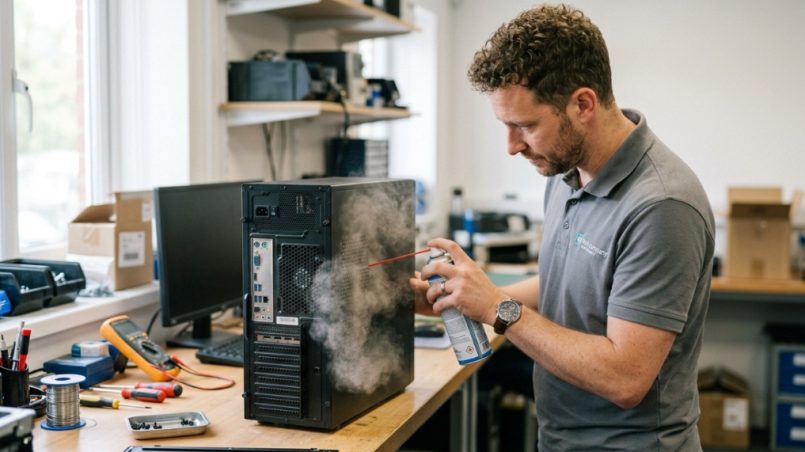
Is your computer fan roaring like a jet engine while your once-speedy machine now crawls through basic tasks? You’re likely dealing with dust-clogged vents, a problem every PC owner in Missouri faces. Dust acts like a blanket, trapping heat and forcing your components to throttle performance. The good news? You don’t need a technician or expensive tools. You need a can of compressed air and the right technique. In this guide, we’ll walk you through the safest, most effective method to clean computer vents air duster MO residents trust, ensuring your system runs cool, quiet, and fast for years to come.
Why Does Dust Accumulate So Quickly in Missouri?
Missouri’s climate creates a perfect storm for dust buildup. Between the humid summers, dry winters, and agricultural pollen, your PC’s intake fans act like a vacuum cleaner for the entire region. Understanding this local factor is the first step toward a proactive maintenance routine.
The “Show-Me State” Dust Factor
From the Ozarks to the Mississippi River, Missouri air carries a mix of soil, pollen, and fine particulate matter. If you live near rural areas or busy highways, your computer’s intake fans will pull in significantly more debris than in coastal states. This isn’t just a cosmetic issue; it directly impacts thermal performance.
Signs Your Vents Are Blocked
Don’t wait for a system crash. Key indicators of blockages include unusually high fan RPMs, warm exhaust air, system slowdowns during light tasks, and random shutdowns. If you notice one or more of these, your vents need immediate attention.
Why Ignoring Dust Is a Costly Mistake
Heat is the silent killer of electronics. Prolonged exposure to high temperatures degrades thermal paste, stresses capacitors, and can cause micro-soldering failures. Cleaning your vents is not a luxury; it’s cheap insurance against a $500+ motherboard replacement.
What Is the Correct Way to Use an Air Duster?
Pointing the nozzle and spraying is the wrong approach. Improper technique can push dust deeper into the power supply or damage fragile fan bearings. The correct method involves controlled bursts, physical stability, and strategic angles.
Pre-Cleaning Preparation Steps
Before you pick up the can, shut down your PC and unplug it from the wall. Press and hold the power button for 15 seconds to discharge residual electricity. Move to a well-ventilated area, preferably outdoors or near an open garage door to avoid redistributing dust indoors,Keeping your hardware running cool is essential, especially when setting up new systems. To ensure your digital workspace runs smoothly alongside clean hardware, check out our guide on how to Get Your Business Ready With Computer Software Prepackaged Software.
The Golden Rule: Never Spin the Fans
Hold the fan blades in place using a plastic spudger, a toothpick, or your finger. Allow the fan to spin freely while spraying forces the motor to act like a generator, sending voltage back into the motherboard. This can cause irreparable damage to the fan header or the board itself.
Technique for Optimal Dust Removal
Use short, controlled bursts (2–3 seconds) rather than a continuous stream. This prevents the propellant from cooling the components to a point where condensation forms. Aim the nozzle at an angle, pushing dust out of the chassis rather than deeper into it.
| Common Mistake | Why It’s Harmful | Correct Action |
|---|---|---|
| Spinning fans with air | Creates reverse voltage that kills motherboard headers | Hold fan blades stationary while spraying |
| Spraying upside down | Propellant sprays as a freezing liquid | Keep the can upright at all times |
| Cleaning in a closed room | Dust settles right back into the case | Vent outside or use a vacuum at the exhaust point |
Which Air Duster Should You Buy in 2026?
Not all compressed air is created equal. The market has shifted significantly, with electric air blowers gaining popularity over traditional aerosol cans. Your choice depends on your usage frequency, budget, and environmental concerns.
Aerosol Cans vs. Electric Air Blowers
Aerosol cans are convenient and portable, but they contain bitterants and propellants that can leave residue. Electric blowers offer unlimited power (no freezing), are eco-friendly, and cost less over time. For a one-time cleanup, a can is fine. For regular maintenance, invest in a blower.
Key Features to Look For in 2026
Look for blowers with brushless motors, adjustable speed settings (10,000–30,000 RPM), and HEPA filtration on the intake to prevent blowing micro-dust. If you choose a can, ensure it’s labeled “ozone-safe” and has a straw nozzle for precision work.
Budget-Friendly Local Options in MO
You can find reliable electronics dusters at Best Buy, Walmart, or Micro Center in the St. Louis or Kansas City areas. However, for a curated list of affordable and highly-rated cleaning tools recommended for Missouri residents, check out the clean computer vents air duster MO guide. It breaks down the best value picks available locally and online.
How Often Should You Clean Your Computer Vents?
There is no one-size-fits-all schedule, but Missouri’s environment dictates a specific cadence. A basic rule: if you can see visible dust on the front intake grill, it’s already too late. Frequency depends on your living situation and how often you use high-load applications.
Standard Maintenance Schedule for MO Residents
For most households, a thorough cleaning every 3–4 months is sufficient. However, if you own pets, live near a construction site, or keep your PC on the floor, shift to a 6–8 week cycle. Laptops require more frequent cleaning due to smaller channels.
Seasonal Considerations in Missouri
Summer is critical. Air conditioning units circulate more air, which means more dust. In spring, pollen counts soar. Clean your vents in late April and late August to ensure optimal efficiency during peak heat and allergy seasons.
Signs You’re Cleaning Too Late
If you hear a high-pitched whine or the fan stutters when starting, the bearings are already wearing out. If your GPU temperatures exceed 85°C on a standard load, the heatsink fins are likely clogged, requiring a deeper internal clean, not just the vents.
Can You Use a Vacuum Cleaner Instead of Air Duster?
Using a household vacuum cleaner is risky. The static electricity generated by the plastic hose can damage sensitive components. Additionally, vacuums create suction that can physically pull connectors and capacitors off the motherboard if you get too close.
When Vacuuming Is the Only Option
You can use a vacuum strictly on the exterior vents (the grill area) with a soft brush attachment. Never insert the nozzle inside the case. Keep the vacuum on a low setting and keep the nozzle at least 2 inches away from any board surfaces.
The Safer Alternative: The “Blow and Suck” Method
Set your PC on a table, use an electric blower to dislodge the dust, and hold a vacuum hose (without attachments) near the exhaust vent to catch the flying debris. This prevents dust from resettling in the room and keeps the case interior cleaner.
Why Air Dusters Are Still the Gold Standard
Air blowers don’t create static, don’t pull components, and can reach crevices that vacuums cannot. For interior work, an air blower is simply safer. For exterior grills, a soft brush and vacuum is acceptable.
Is It Safe to Clean Laptop Vents With Air Duster?
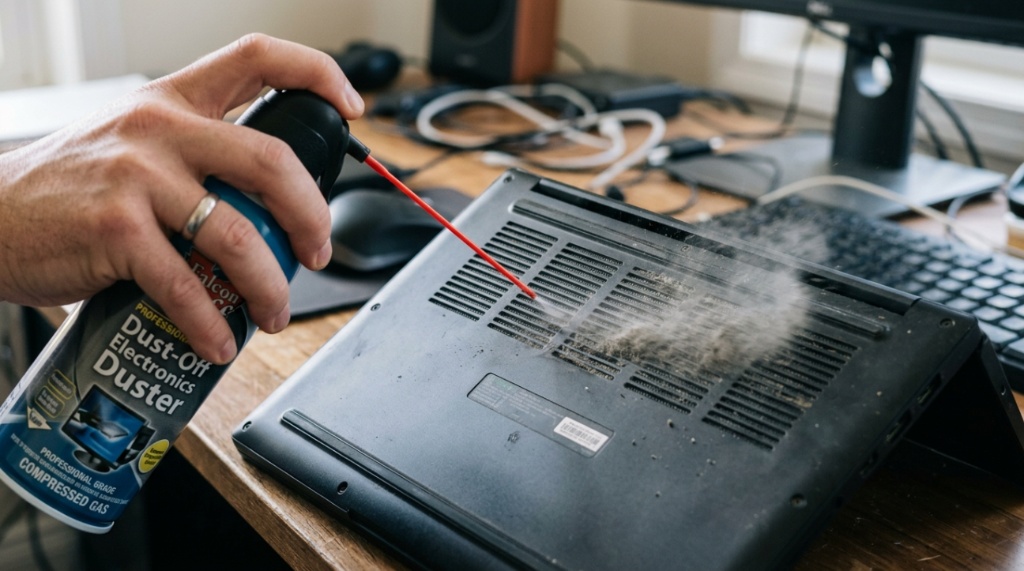
Yes, but with extreme caution. Laptops have smaller tolerance levels, and the fan blades are more delicate. Laptop vents are often on the bottom or side, and the internal heat pipes are closer to the surface. A direct aggressive spray can push dust into the keyboard area.
How to Clean a Laptop Safely
Shut down, unplug, and remove the battery if possible. Turn the laptop upside down and use short bursts through the exhaust vent. Never tilt the can more than 15 degrees. Hold the fan still with a thin plastic tool if accessible.
Common Laptop Cleaning Pitfalls
Do not spray into the optical drive or the keyboard. Do not use a high-pressure blower on high settings; start at the lowest speed. If your laptop is under warranty, check if disassembly or cleaning is covered—some manufacturers void warranties for physical cleaning damage.
Ultrabook and MacBook Considerations
Devices like MacBooks have side vents that are angled. Always spray parallel to the chassis, not directly into the opening. For sealed units, cleaning the exterior grill with a microfiber cloth is often all you can do without opening the case.
What Are the Step-by-Step Instructions for a Full PC Clean?
This process covers the entire machine, not just the vents. Following this sequence ensures comprehensive airflow restoration and thermal improvement.
Phase 1: Exterior and Intake Grills
Slide the side panel off. Place the computer on a stable surface. Use the blower to clear the front intake fans, pushing dust toward the rear exhaust. Then, brush the removable dust filters under running water and let them dry completely before reinstalling.
Phase 2: CPU Cooler and GPU Fans
Hold the CPU fan blades with a finger. Spray in a cross-pattern to remove dust stuck to the heatsink fins. For the GPU, do the same—focus on the area between the shroud and the heat pipes. Use the straw nozzle for tight gaps.
Phase 3: Power Supply Unit (PSU)
Point the nozzle into the PSU grill and spray outward. Do not open the PSU casing. If heavy dust clumps exist inside, use a cotton swab to brush gently, but avoid metal contact. Ensure the PSU is completely dry before powering on.
Why Are My Computer Vents Still Dirty After Cleaning?
If you cleaned but still see dust, there are three culprits: negative air pressure, missing filters, or the dust is embedded in the heatsink, not just the vents. True cleanliness requires addressing the airflow path.
Balancing Air Pressure in Your Case
If more fans are exhausting than pulling air in, the case operates under negative pressure. This forces air in through every crack and unfiltered seam, bringing more dust. Aim for a slight positive pressure (more intake than exhaust) to force air out through filters.
Upgrading to Fine Mesh Filters
Stock filters often have large holes. Aftermarket filters like Demciflex or SilverStone offer high-mesh nylon that traps particles smaller than 120 microns. These are affordable and can cut your cleaning frequency by 70%.
Replacing Damaged Rubber Grommets
Vibration from fans can wear out the rubber sealing around vent openings. This allows unfiltered bypass air. Replace these grommets or use foam tape to create a reliable seal between the case and filter.
Can Cleaning Vents Extend the Lifespan of Your PC?
Absolutely. Electronics operate best in cooler environments. Every 10°C (18°F) reduction in operating temperature can double the lifespan of capacitors and silicon components. Clean venting prevents thermal cycling, which is the physical stress of expanding and contracting materials.
The Thermal Throttling Effect
When components exceed 80–90°C, they throttle their clock speeds to cool down. This means your 5.0 GHz CPU might run at 4.0 GHz. Cleaning restores full performance without upgrading any hardware—the cheapest performance boost you’ll ever get.
Real-World Performance Gains
Users typically see a 5–15% FPS increase in gaming after a deep clean, purely from thermal headroom. Video editors will notice a reduction in render times. Windows will boot faster because the system isn’t waiting for hardware initialization delays caused by overheating.
Financial Savings in the Long Run
A $10 can of air used correctly can delay a full system rebuild by 2–3 years. Considering the cost of new RAM, GPUs, and storage drives, regular cleaning is the most cost-effective maintenance task you can perform.
What Should You Do If Your PC Overheats After Cleaning?
If temperatures spike right after your clean, you likely did one of three things: unseated a heatsink, forgot to reconnect a fan header, or accidentally dislodged the CPU cooler during the spray process.
Quick Troubleshooting Checklist
Immediately open the side panel and verify all fans are spinning. Check the CPU fan header (usually labeled CPU_FAN). Reseat the RAM and GPU to ensure they weren’t partially dislodged. Check fan curves in BIOS to ensure case fans are not set to silent.
Reapplying Thermal Paste
If you removed the CPU cooler during cleaning (which is not recommended with an air duster), you must clean off the old paste and apply new thermal paste. Using the old paste after lifting the cooler introduces air bubbles, causing immediate overheating.
When to Seek Professional Help in MO
If the system still overheats or shows error codes, there might be electrical damage or a failing pump (if liquid-cooled). A local repair shop in Springfield or Columbia can run diagnostics for under $50, which is cheaper than risking component damage.
Frequently Asked Questions
Can I use a hair dryer instead of an air duster?
No. Hair dryers blow hot air and generate static electricity, which can damage electronics. They also create condensation if used on cooler components. Always use a purpose-built air blower or a can of compressed air.
How long should I wait after cleaning before powering on?
Wait at least 10 minutes after using an aerosol can to allow any residual propellant to evaporate completely. If you washed filters with water, wait until they are bone-dry (up to 1 hour). Never power on a wet system.
Is it safe to use an air compressor to clean my PC?
Air compressors are not recommended. They contain moisture and oil settling in the tank that can spray onto your components. If you must use one, attach a filter and purge the tank, but an electric blower is safer and cleaner.
Why does my computer fan sound loud even after cleaning?
Loud noise after a clean suggests a failing bearing (mechanical noise) or a fan curve reset to “Performance” mode. Check BIOS settings. If the noise is a grinding sound, replace the fan—it has reached the end of its lifespan.
Can dust in vents cause a short circuit?
Dust itself is not conductive, but it absorbs moisture from the air. In humid conditions, damp dust can create a conductive path. This is rare but possible. Regular cleaning mitigates this risk and prevents acrid smells from burning dust.
Should I clean my computer vents outdoors?
Yes, if possible. Cleaning outdoors prevents dust from resettling in your room. However, avoid cleaning on windy days to prevent foreign debris from blowing into the open case. A garage or porch works best.
What is the lifespan of a budget air duster can?
A 10-ounce aerosol can typically lasts for two thorough PC cleanings if used in short bursts. An electric blower lasts for years with no refills needed, making it a better investment for regular maintenance enthusiasts.