
Experienced UI/UX designers improve product success rates by reducing user friction, validating ideas before development, and creating intuitive experiences that encourage engagement and retention. Their research driven approach helps businesses launch products that satisfy customer needs while lowering redesign costs.
Products with strong user experiences often achieve better conversions, while poor experiences discourage repeat visits. Research also shows that every dollar invested in user experience can generate significant business returns, and many users leave after a frustrating digital experience. Experienced UI and UX designers help organizations avoid those losses through thoughtful planning, continuous testing, and user centered design.
Why UI/UX Experience Matters
Experienced designers understand that successful products solve real user problems instead of adding unnecessary features. They balance business goals with customer expectations throughout every design decision.
Their knowledge helps teams identify usability issues before development begins. As a result, businesses spend less time fixing expensive mistakes after product launches.
Understanding Product Success
Product success extends beyond attractive visuals or modern layouts. It depends on how effectively customers achieve their goals while enjoying a smooth experience.
Successful products usually demonstrate:
- High customer satisfaction
- Better user retention
- Strong conversion rates
- Lower support requests
- Positive customer reviews
- Increased customer loyalty
These outcomes rarely happen by accident. Experienced designers intentionally build experiences that encourage them.
How Experienced Designers Research User Needs
Research forms the foundation of every successful UI and UX project. Skilled designers avoid assumptions by collecting real user insights before creating interfaces.
User Interviews
Direct conversations uncover customer expectations, frustrations, and daily challenges. These insights guide smarter design decisions from the beginning.
Surveys
Surveys gather feedback from larger audiences quickly. They help identify common problems and prioritize improvements.
Competitor Analysis
Experienced designers study competing products carefully. They learn what works while discovering opportunities for meaningful improvement.
Behavioral Analysis
Observing user behavior reveals obstacles that customers may never mention directly. This information strengthens future design decisions.
Creating Better User Journeys
User journeys illustrate every interaction customers experience while using a product. Experienced designers remove unnecessary steps that slow progress.
Simplified journeys reduce frustration and improve task completion rates. Customers appreciate products that feel natural from the first interaction.
Each screen should support the next logical action. Clear navigation keeps users confident throughout the entire experience.
Improving First Impressions
First impressions influence whether users continue exploring or leave immediately. Experienced designers understand this critical moment.
Clean layouts establish trust quickly. Consistent branding strengthens recognition while supporting professional credibility.
Readable typography improves comprehension across every screen. Balanced spacing also reduces visual clutter and supports comfortable reading.
Designing For Accessibility
Accessibility benefits every user instead of serving only specific audiences. Experienced designers build inclusive experiences from the beginning.
Common accessibility improvements include:
- High color contrast
- Keyboard navigation support
- Clear button labels
- Readable font sizes
- Alternative image descriptions
- Logical page structure
Accessible products often reach larger audiences while reducing usability barriers.
Reducing User Friction
Friction appears whenever users struggle to complete simple tasks. Experienced designers identify these problems before they become expensive business issues.
Examples include confusing menus, complicated forms, unclear instructions, and unnecessary steps. Removing these obstacles increases customer satisfaction.
Simple experiences encourage users to complete purchases, registrations, and other valuable actions.
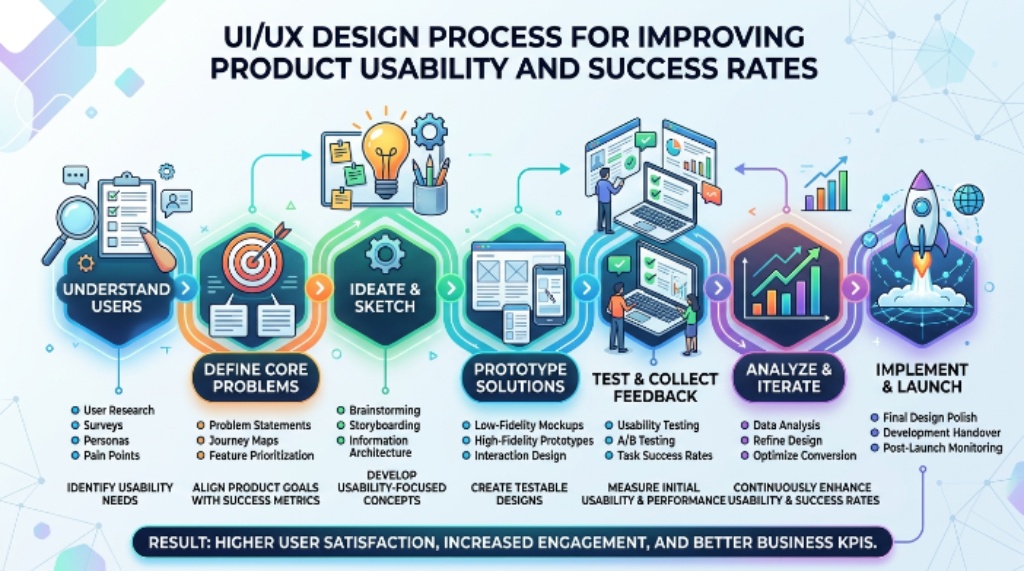
Using Prototypes Before Development
Prototypes allow teams to evaluate ideas without building complete products. Experienced designers use them to collect feedback early.
Testing prototypes saves development time because major issues appear before coding begins. Businesses avoid costly revisions after launch.
Interactive prototypes also improve communication among designers, developers, and stakeholders.
Conducting Usability Testing
Usability testing reveals whether real users understand a product naturally. Experienced designers watch customers complete realistic tasks.
Testing identifies hidden obstacles that internal teams frequently overlook. Small adjustments often produce meaningful improvements.
Regular testing supports continuous product improvement instead of one time optimization.
Collaborating Across Teams
Great products require cooperation between multiple departments. Experienced UI and UX designers communicate effectively with every stakeholder.
They regularly work alongside:
- Product managers
- Software developers
- Marketing specialists
- Business leaders
- Quality assurance teams
- Customer support representatives
Strong collaboration keeps everyone aligned toward shared product goals.
Supporting Business Objectives
Experienced designers understand that attractive interfaces alone cannot guarantee success. Every design decision should support measurable business outcomes.
They prioritize features that increase engagement, strengthen customer loyalty, and improve revenue opportunities. Design becomes an investment rather than an expense.
Business objectives remain visible throughout planning, testing, development, and future improvements.
Building Trust Through Consistency
Consistent experiences reduce confusion while strengthening customer confidence. Experienced designers maintain predictable interactions across every screen.
Buttons should behave consistently throughout the product. Navigation patterns should remain familiar regardless of where users travel.
Consistency reduces learning time while improving long term satisfaction.
Optimizing Mobile Experiences
Many customers primarily access products through smartphones and tablets. Experienced designers prioritize responsive experiences across different screen sizes.
Touch friendly controls improve usability on smaller devices. Fast loading interfaces also encourage continued engagement.
Mobile optimization strengthens customer satisfaction while supporting broader business growth.
Measuring Design Success
Experienced designers rely on measurable data instead of personal opinions. Clear metrics demonstrate whether improvements deliver meaningful business value.
Important performance indicators include:
- Task completion rate
- Conversion rate
- Customer retention
- Session duration
- Error frequency
- Customer satisfaction scores
Monitoring these metrics supports informed decisions throughout the product lifecycle.
Preventing Costly Design Mistakes
Poor design often creates expensive development changes after launch. Experienced designers minimize these risks through structured planning and validation.
They identify usability problems early when corrections remain affordable. This proactive approach protects project budgets while improving final quality.
Organizations also release products faster because fewer unexpected revisions delay development.
Balancing Innovation With Familiarity
Creative ideas attract attention, but excessive novelty can confuse users. Experienced designers introduce innovation without sacrificing usability.
They preserve familiar interaction patterns whenever possible. Customers quickly adapt because essential actions remain recognizable.
Balanced innovation creates memorable experiences while protecting usability.
Encouraging Customer Loyalty
Satisfied customers frequently return to products that consistently solve problems. Experienced designers focus on long term relationships instead of short term engagement.
Positive experiences encourage recommendations through word of mouth. Loyal customers often become valuable brand advocates over time.
Long term retention typically costs less than continuously acquiring new customers.
Common Qualities Of Experienced UI/UX Designers
Successful professionals often demonstrate several valuable characteristics.
- Strong problem solving abilities
- Excellent communication skills
- Deep empathy for users
- Analytical thinking
- Continuous learning mindset
- Attention to detail
These qualities help designers create practical solutions that satisfy both users and businesses.
Conclusion
Experienced UI/UX designers improve product success rates by combining research, usability testing, accessibility, collaboration, and continuous improvement. Their expertise reduces customer frustration while increasing engagement, loyalty, and business performance. Invest in experienced design professionals early to build products that customers enjoy using and confidently recommend.
FAQs
How do experienced UI/UX designers improve product success?
They improve success by creating user focused experiences that increase satisfaction, retention, and conversions.
Why is user research important in UI/UX design?
User research identifies real customer needs before expensive development begins.
Does good UI/UX increase customer retention?
Yes, intuitive experiences encourage customers to return and continue using the product.
When should businesses involve UI/UX designers?
Businesses should involve them from the earliest planning stage of every product.
Can better UI/UX reduce development costs?
Yes, early testing and validation prevent expensive redesigns after product launches.